Xia Dynasty
Introduction
The Xia Dynasty, which is traditionally dated from around the 21st century to the 16th century BC, is recognized as the first hereditary dynasty in Chinese history. Despite being a subject of intense scholarly debate due to the lack of contemporaneous written records, it holds a significant place in Chinese historiography and cultural memory. The Xia Dynasty is often regarded as a foundational period in the early development of Chinese civilization, marking the beginning of a centralized state system.
Archaeological Evidence
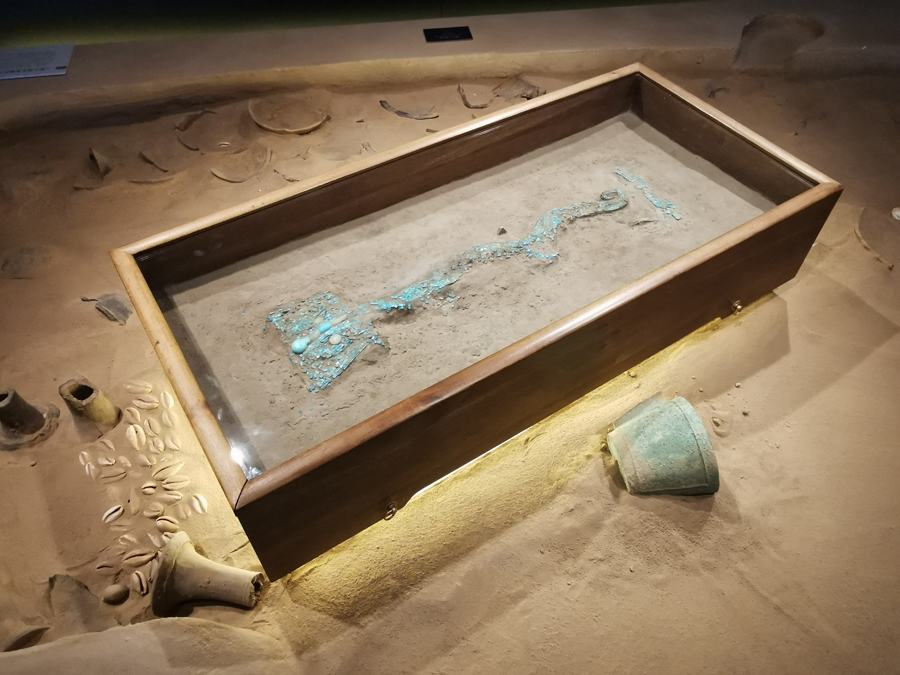
While no written documentation from the Xia period has been discovered, ongoing archaeological excavations, particularly at the Erlitou Site in Luoyang, Henan province, have provided significant insight into this era. The Erlitou Site, sprawling over 3 square kilometers, is believed to be the capital of a state-like entity that some researchers associate with the Xia Dynasty. This site has yielded numerous artifacts, including ritual bronze vessels, pottery, and jade objects, which indicate a well-developed society with complex social structures.
Erlitou Culture
The Erlitou culture, identified through excavations at the Erlitou Site, is characterized by its advanced urban planning and distinctive artifacts. Discoveries include the earliest known Chinese bronze vessels, sophisticated jade craftsmanship, and evidence of early palatial structures. The site's layout, with a multi-grid pattern and centralized administrative areas, suggests a high degree of social organization and governance.
Recent Discoveries
In recent years, findings at the nearby Baliqiao Site in Nanyang have provided further evidence of a high-level settlement dating back to the same period as Erlitou. This site has revealed urban infrastructure such as city walls, roads, moats, and large-scale architectural foundations, which support the notion of a centralized government. Artifacts similar to those found at Erlitou, such as turquoise and bronze wares, suggest cultural and possibly political links between the two sites.
Historical Records and Debate
The Xia Dynasty is mentioned in early Chinese historical texts such as the "Shiji" (Records of the Grand Historian) and the "Bamboo Annals." According to these accounts, the dynasty lasted 471 years and was ruled by 17 kings over 14 generations. The legendary figure Da Yu, credited with controlling the floods of the Yellow River, is traditionally considered the founder of the Xia Dynasty. However, the lack of direct archaeological evidence linking these texts to physical remains has led some scholars to question the historicity of the Xia Dynasty as described in these records.
Cultural and Historical Significance
The Xia Dynasty occupies an essential place in Chinese cultural heritage. It symbolizes the early development of Chinese civilization and statehood, representing a period when tribal communities began to coalesce into a more unified and organized society. The Xia period laid the groundwork for the subsequent Shang and Zhou dynasties, influencing the formation of Chinese cultural and political traditions.








